How to Embrace Gray Hair Gracefully: A Complete Guide
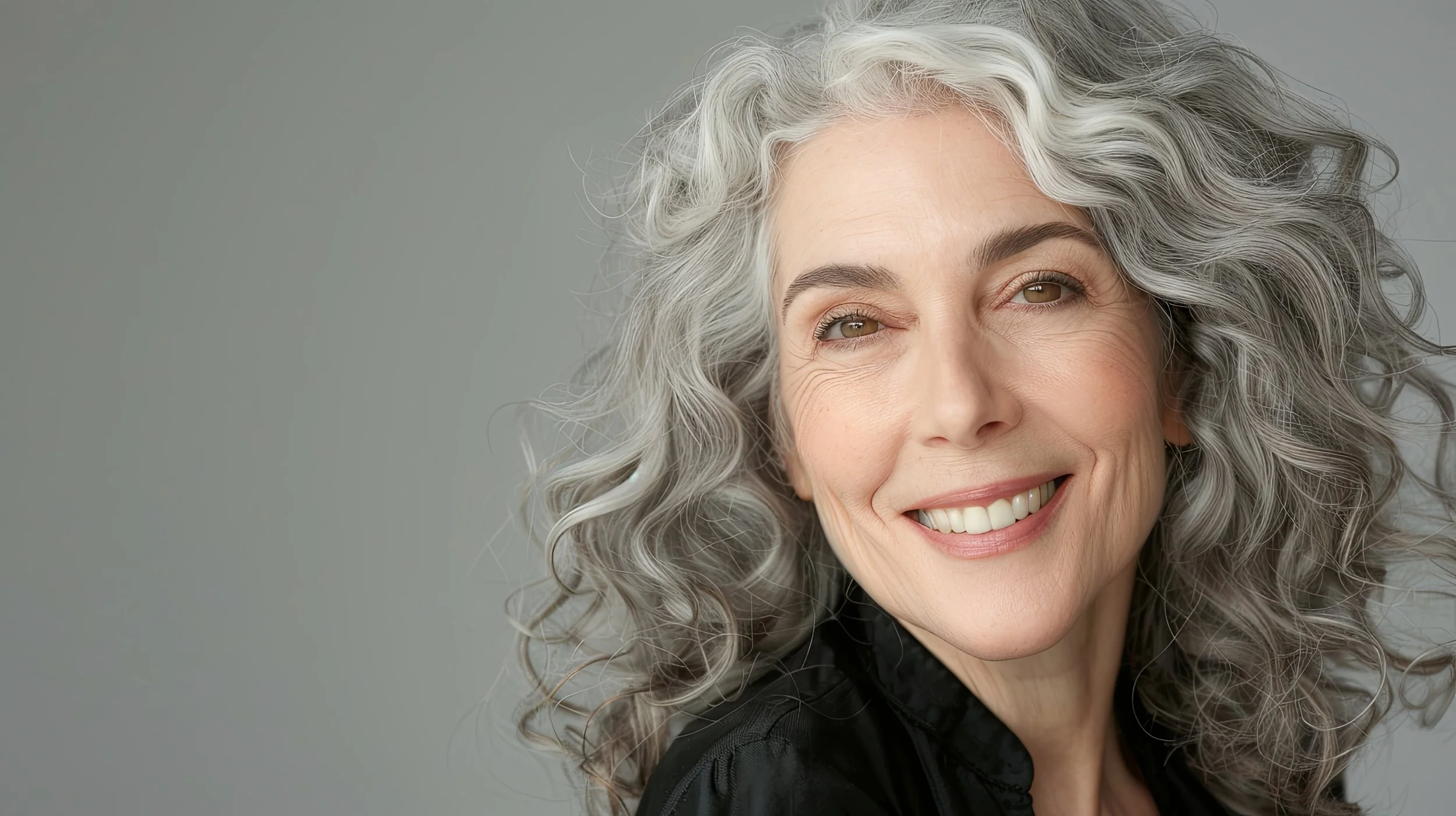
Going gray is not giving up. This needs to be said clearly because the cultural message — while shifting — still carries residual suggestions that gray hair is a concession to age, a lowering of the effort bar, a decision made when fighting becomes too tiring. It is none of those things. Gray and silver hair worn with intention is a specific aesthetic — one of the most striking available to women over 50, and one that an increasing number of women are choosing deliberately rather than reluctantly.
The distinction that matters is not between gray and coloured hair. It is between intentional and unintentional. Gray hair worn as a deliberate choice — considered cut, maintained condition, styled with attention, makeup adjusted for the changed colour palette — looks completely different from gray hair that simply arrived and was left to its own devices. The first reads as a statement. The second reads as inattention. This guide covers everything that separates the two.
It also covers the transition — the phase between coloured and fully gray — which is where most women either commit or retreat. The transition is the hardest part, and there are more options for navigating it than most women know.
The women who wear gray hair most strikingly are those who went into it with intention. The decision to go gray is not the end of caring about your hair — it's the beginning of caring about it differently.
Understanding gray hair — what's actually happening
Why hair goes gray
Hair colour is produced by melanocytes — pigment-producing cells in the hair follicle — which inject melanin into each hair shaft as it grows. As we age, these melanocytes progressively stop producing melanin, and each follicle's hair grows without pigment. The timing is largely genetic: when your parents went gray, when your siblings go gray, is the most reliable predictor of when you will.
'Gray' hair is a visual effect produced by a mixture of pigmented and unpigmented hairs — the ratio determines whether the overall appearance reads as salt-and-pepper, steel gray, or silver. Fully white hair contains no melanin at all. The texture of unpigmented hair is structurally different from pigmented hair: the cuticle (the outer protective layer) lies less flat, making gray hair more porous, more prone to absorbing environmental moisture and pollutants, more susceptible to dryness and frizz, and sometimes coarser to the touch.
Why gray hair behaves differently
Understanding the structural differences of gray hair changes how you care for it. The increased porosity means it absorbs water more readily (which causes swelling and frizz in humid conditions) and loses moisture more quickly (which causes dryness). It also absorbs and holds tints, pollutants, and product build-up differently from pigmented hair — which is why white and silver hair can develop a yellow cast from hard water, heat styling, product residue, and environmental exposure.
Gray hair also tends to feel coarser and more wiry than the same person's pigmented hair — this is real and not simply a perception. The structural change in the cuticle changes the tactile quality of the hair. This means that products that worked well on pigmented hair — particularly any product designed for fine or smooth hair — may not work as well on gray hair, which benefits from more intensive moisture treatment.
The transition — four routes
Cold turkey: stopping colour immediately
The fastest route to fully gray hair is stopping colour entirely and growing out the natural root. The advantage: it is over within twelve to eighteen months (depending on hair length and growth rate) and avoids the extended overlap period. The significant challenge: the demarcation line between coloured ends and natural root is visible throughout the grow-out and can be stark, particularly if the existing colour is dark or very different from the natural gray.
Who suits this route: women with hair that is predominantly white or very silver (which looks intentional from the start rather than neglected), women with shorter hair where the grow-out is faster, and women with sufficient confidence to wear the transition line as a feature rather than a problem. The two-tone effect during grow-out can be managed with cuts that progressively remove the coloured length — going shorter through the transition rather than waiting it out at the same length.
Highlights and balayage to blend the transition
Adding highlights or balayage through the existing colour bridges the gap between the natural root and the rest, creating a gradual blend rather than a hard line. This is the most commonly chosen transition route for women with darker hair because it produces a softer, less dramatic grow-out appearance. The highlights are placed to match and merge with the incoming gray, so the transition becomes progressively less visible with each growth cycle.
The limitation: it requires ongoing salon appointments during the transition and adds cost to what eventually becomes a lower-cost care routine. The payoff is a more comfortable visual journey through the transition — fewer months where the two-tone effect is distracting.
Lowlights to soften the existing colour
The reverse approach: adding darker lowlights to very light or very gray hair to create dimension and depth rather than uniform silver. Useful for women whose natural gray appears flat or dull against their skin tone, or who want the softness of dimension rather than the boldness of solid silver. Lowlights are also the technique sometimes used to introduce gray intentionally in women who haven't yet started transitioning but are considering it — a softer entry than going fully cold turkey.
Bleach and tone: the fastest statement
For women who want to arrive at silver or white as quickly as possible, bleaching the coloured sections to near-white and then toning to match the natural gray is a salon option. It is the most damaging approach (bleaching causes significant structural damage to the hair shaft) and requires commitment to intensive conditioning maintenance, but it can reduce the visible transition period significantly. It works best on shorter hair where the total amount of hair being processed is lower, and is not advisable for already-compromised or chemically processed hair without expert consultation.
Caring for gray hair — the specifics
The toning shampoo: use it correctly
Purple shampoo (or silver shampoo) deposits a small amount of violet pigment on the hair shaft which neutralises yellow and brassy tones — the visual complement of purple cancels out the yellow in the colour wheel. It is one of the most effective tools for maintaining bright, clean gray and white hair.
Used incorrectly, it turns hair lilac or grey-purple. The common mistakes: using it every wash (too much pigment deposits), leaving it on too long (same result), and using it on hair that doesn't need toning. Correct use for most women: once or twice per week, left on for two to five minutes (adjust based on your hair's response — if it's pulling purple, reduce time or frequency). On naturally warm-toned gray (champagne, golden-silver), toning should be used cautiously — the warmth may be an asset rather than a flaw.
Moisture is the primary maintenance need
The increased porosity of gray hair means moisture escapes more readily and must be replaced more consistently. A deeply moisturising conditioner used every wash, plus a weekly or twice-weekly deep conditioning treatment (a hair mask or a rinse-off conditioning treatment left on for ten to twenty minutes), addresses the structural dryness that makes gray hair feel wiry or rough.
Hair oils — particularly argan, camellia, or jojoba oil — applied to the mid-lengths and ends after washing add the lipid layer that gray hair's stripped cuticle lacks. A small amount (one or two drops for short hair, three to five for longer) worked through towel-dried hair before styling adds shine and reduces frizz without weighing the hair down. Shine is particularly important for gray hair — dull, flat gray reads as aging; bright, reflective silver reads as distinguished.
The gloss treatment: occasional but transformative
Clear or tinted gloss treatments — available in salons and increasingly in at-home versions (Clairol Colour Gloss Up, Wella Color Fresh, L'Oréal Casting series in clear) — smooth the hair cuticle and add reflectivity without permanent colour commitment. A clear gloss every six to eight weeks produces a noticeably brighter, more polished result on gray hair. Tinted glosses can add depth, warmth, or a specific silver tone without full colour commitment.
Makeup with gray hair — the colour recalibration
Why the palette shifts
The same foundation, blush, and lip colours that worked with coloured hair may need adjustment when hair goes gray. The reason is contrast and colour temperature. Dark or warm-toned hair creates a contrast with the face that allows bolder or warmer makeup colours to read well. Gray and silver hair — which is cool-toned and relatively neutral — changes the relationship between hair colour and face colour, requiring a recalibration of which makeup tones work best.
What typically works better with gray hair
Cool-toned pinks and roses in blush, rather than the warm corals and peaches that suit many women with warmer hair. Berry and plum lip tones, which the silver hair can support in a way that brown-based or caramel tones cannot. Eyes: the cool contrast of gray hair makes soft grey, taupe, and warm brown eyeshadow more flattering than bright or warm-toned shadows. Foundation with cooler or neutral undertones, rather than the warm-undertone foundations that many women were matched to when their skin tone was read alongside warm hair.
The principle: gray hair cool-tones the whole palette. Makeup that previously looked great may read as washed out; colours that previously seemed too cool or too strong may now be exactly right. Worth revisiting foundation matching and overall palette when the transition is complete. The makeup mistakes that undermine the natural look after 50 become more relevant once hair has gone gray — particularly the brow colour consideration, since brow hair often lightens alongside head hair and the previously appropriate brow product may now be too dark.
Cut — why it matters more than ever
The relationship between gray hair and cut is more significant than for coloured hair. Color does substantial visual work in any hairstyle — creating dimension, shading areas, adding depth and movement. When color is absent, the cut must do more of this work alone. A well-cut head of gray hair looks deliberate and elegant. Poorly cut gray hair looks untended in a way that the same poor cut in coloured hair would not.
What this means practically: the quality of the cut matters more, the frequency of trims matters more (gray hair shows the edge and shape of the cut more clearly), and the specific cut chosen should be one designed for the hair's actual texture and density rather than chosen from habit. the hairstyles that work specifically for women over 50 covers which cuts perform best on mature hair — and many of them are particularly suited to gray hair because they are designed to work with texture rather than against it.
Silhouette is everything with gray hair. The combination of silver or white hair with a strong, clean shape produces one of the most striking looks available to women at this stage. The combination of gray hair with a vague, undefined shape produces the opposite effect. Invest in the cut.
Our weekly letter covers hair, beauty, and style for women over 50. Subscribe at femmementor.com.