The Menopause Brain — Dr. Lisa Mosconi: 10 Key Ideas for Women Who Want to Understand What’s Actually Happening to Their Mind
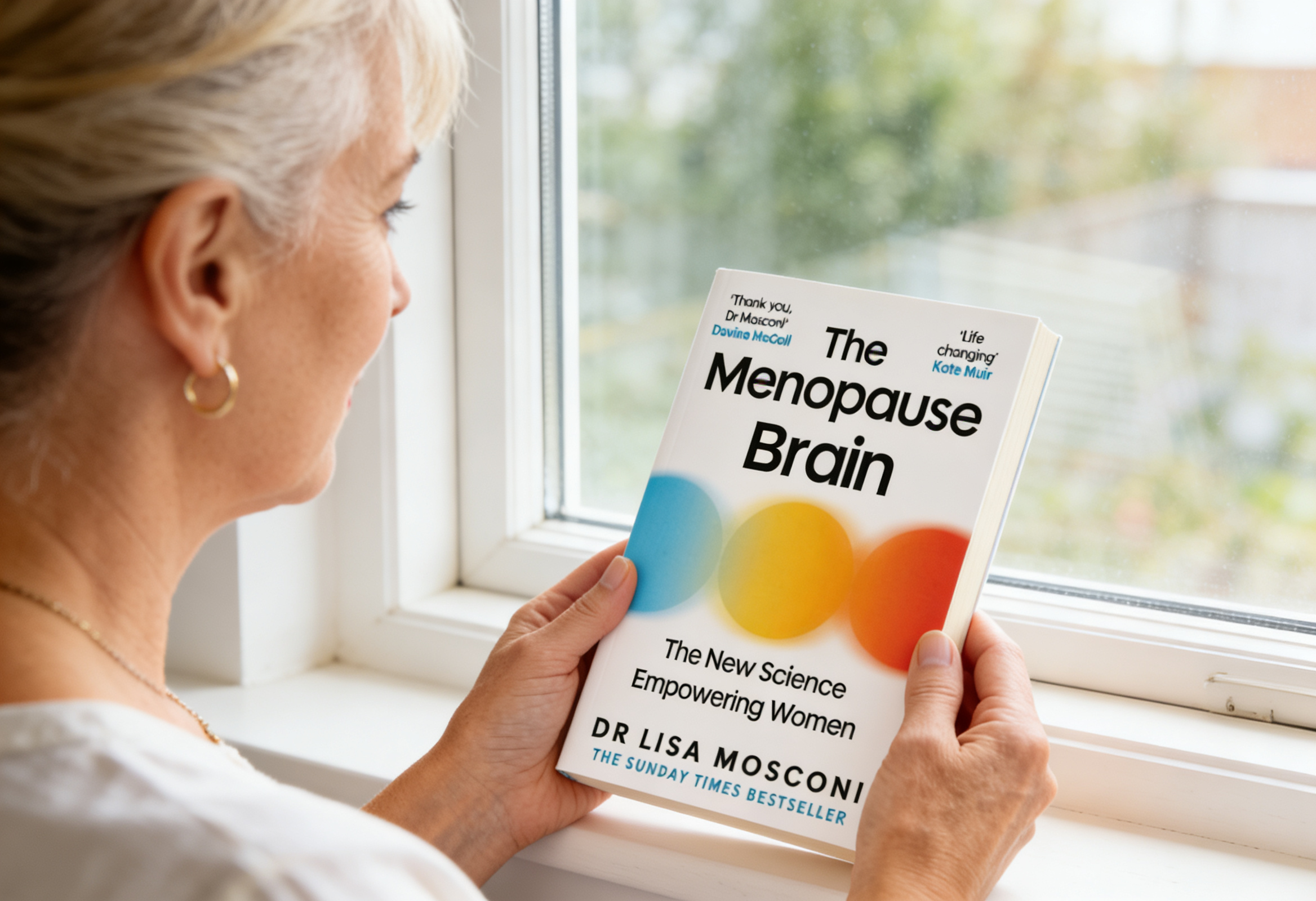
A neuroscientist who has spent decades imaging women’s brains explains what perimenopause and menopause actually do to cognition, mood, and memory — and why ‘it’s just hormones’ is both true and nowhere near sufficient.
The first time Patricia, 48, forgot a word mid-sentence at a client meeting, she assumed she was tired. The second time — a different word, a different meeting, the same excruciating pause — she went home and searched her symptoms. The results frightened her: early dementia appeared in the first page of results. She called her GP. She was told her bloods were normal.
What she wasn’t told — because most GPs are not trained in this — was that the brain changes she was experiencing are a documented feature of perimenopause, have been imaged in clinical studies, and are in most cases temporary. She was also not told that what happens in those years has implications for long-term cognitive health that are worth understanding now, not after the fact.
Dr. Lisa Mosconi is the director of the Women’s Brain Initiative at Weill Cornell Medicine. She has spent two decades imaging women’s brains across the menopause transition. The Menopause Brain is the first major book to bring that research to a general audience, clearly, without either minimising the experience or catastrophising it. Here are 10 ideas that matter most.
What the Research Shows
Idea 1. The menopause transition is a neurological event, not just a hormonal one.
Mosconi’s central finding, repeated throughout the book with the confidence of a researcher who has the brain scans to support it: menopause is not only happening in the ovaries. It is happening in the brain. The brain produces, uses, and responds to estrogen in ways that affect metabolism, structure, and function. When estrogen levels shift during perimenopause, the brain shifts with them.
The symptoms that women report during this period — brain fog, word-finding difficulties, memory lapses, disrupted sleep, mood changes, anxiety — are not psychosomatic. They have neurological correlates that can be measured and imaged. This is important not because it makes the experience worse, but because it changes what is appropriate to do about it.
For women who have been told that their symptoms are stress, depression, or simply ageing, this chapter is a form of vindication. The experience is real. The brain is involved. And the medical system’s longstanding failure to take menopausal symptoms seriously — to study them, to treat them, to train doctors to recognise them — is a failure Mosconi documents with restrained but unmistakable frustration.
Idea 2. Brain fog is real and has a specific mechanism.
The cognitive symptoms that women experience during perimenopause — particularly the word-finding difficulty, the feeling of operating through cotton wool, the uncharacteristic forgetfulness — are associated with measurable changes in brain glucose metabolism. Estrogen plays a role in the brain’s energy supply. When it declines and fluctuates, the brain’s ability to use glucose efficiently is temporarily impaired.
Mosconi’s imaging studies show reduced metabolic activity in specific brain regions during the menopause transition, including areas involved in memory and language. In most women, this metabolic disruption is transient — the brain adapts. But the adaptation takes time, and during that time the experience is both real and disorienting.
This is the finding that Patricia needed. What she was experiencing had a name, a mechanism, and a trajectory. For most women, the brain fog of perimenopause resolves as the brain adjusts to its new hormonal environment. Knowing that the fog is likely to lift is not a cure for the fog, but it substantially changes the experience of being in it.
Idea 3. Estrogen is a neuroprotective agent, and its loss has long-term implications.
This is the finding with the longest reach. Estrogen does not only regulate the reproductive system. It has significant neuroprotective effects: it supports the growth and maintenance of neurons, regulates inflammation in the brain, and appears to play a role in reducing the risk of Alzheimer’s disease.
Women develop Alzheimer’s at higher rates than men — not, Mosconi argues, primarily because women live longer, but because the loss of estrogen at menopause removes a protective biological mechanism that men do not lose in the same way. This is not deterministic. It is a risk factor that can be understood and addressed.
This chapter asks women to think about their brain health in their 40s and 50s as a form of long-term investment. The decisions made during and after the menopause transition — about hormone therapy, diet, exercise, sleep, stress — have implications for cognitive health in the decades ahead. Mosconi does not frame this as a crisis. She frames it as an opportunity to act when acting is most effective.
Hormones and Treatment
Idea 4. The Women’s Health Initiative study was misread, and its fallout harmed women.
The 2002 Women’s Health Initiative study, which appeared to link hormone replacement therapy to increased risk of breast cancer and cardiovascular disease, caused a dramatic and lasting decline in HRT prescriptions. The effect was significant: millions of women were denied or declined treatment that could have helped them.
Mosconi is careful but clear: the WHI study has since been substantially reanalysed and recontextualised. Its findings applied to a specific population (older women, many years post-menopause, using a specific synthetic formulation) and were generalised far beyond what the data supported. The risk profile of HRT for healthy women in perimenopause or early menopause using body-identical hormones is very different from what the initial headlines suggested.
Many women who are currently experiencing significant perimenopausal symptoms — including cognitive symptoms — are not receiving hormone therapy partly because of fears that have not been updated with current evidence. Mosconi is not advocating that all women take HRT. She is advocating that women have access to accurate information so that their decisions are genuinely informed.
Idea 5. The timing of hormone therapy matters more than whether you take it.
One of the most important findings in the book is the ‘window of opportunity’ or ‘critical period’ hypothesis: the neuroprotective effects of estrogen therapy appear to be most significant when started during perimenopause or early menopause, rather than years later. Starting HRT a decade after menopause may not confer the same brain-protective effects as starting during the transition itself.
This has practical implications. Women who are currently in perimenopause and considering hormone therapy are in the window when the evidence for cognitive benefit is strongest. This is not an argument for every woman to start HRT immediately. It is an argument for having the conversation with a knowledgeable clinician now rather than later.
The window of opportunity framework changes the urgency of the decision. For women who have been ‘waiting to see how it goes,’ this chapter raises the question of what they may be waiting through and at what cost. The decision is personal and medical. The timing, Mosconi argues, should be part of that conversation.
Lifestyle and the Brain
Idea 6. Sleep is the single most important lifestyle factor for brain health during menopause.
Mosconi is unambiguous on this: the brain’s glymphatic system — its overnight cleaning mechanism, which clears the metabolic waste products associated with neurodegeneration — operates almost exclusively during sleep. Chronic sleep disruption, which is one of the most common and most underaddressed symptoms of perimenopause, impairs this process.
The relationship between menopausal sleep disruption and long-term brain health is direct. Vasomotor symptoms (hot flushes and night sweats) that wake women multiple times per night are not merely inconvenient. They are interrupting a process that matters for the brain’s long-term health. Treating sleep disruption is treating the brain.
For women who have accepted poor sleep as an unavoidable feature of this life stage, this chapter reframes that acceptance. Sleep is not a comfort issue during menopause. It is a brain health issue. Pursuing effective treatment — whether through hormone therapy, non-hormonal medications, cognitive behavioural therapy for insomnia, or environmental changes — is worth the effort.
Idea 7. The Mediterranean diet has the strongest evidence base for female brain health.
Mosconi’s dietary recommendations are grounded in her neuroscience research and are specific rather than generic. The dietary pattern with the strongest evidence for reducing Alzheimer’s risk and supporting cognitive function in women is the Mediterranean diet: olive oil, fatty fish, vegetables, legumes, nuts, whole grains, and modest wine.
She is particularly focused on the omega-3 fatty acids in fatty fish, the polyphenols in olive oil and berries, and the role of adequate protein in maintaining muscle mass and neurological function. She is also clear about what the evidence does not support: ketogenic diets, which she notes have been studied almost exclusively in male subjects and whose effects on women’s brains and hormones are poorly understood.
The dietary advice in this book is notable for being both evidence-based and enjoyable. The Mediterranean pattern is not a restrictive diet. It is a way of eating that happens to align with what brain imaging research says the female brain needs in midlife. That alignment is worth knowing about.
Idea 8. Aerobic exercise is a neurological intervention.
The evidence for aerobic exercise as a neuroprotective factor is among the strongest in the book. Regular aerobic exercise — at minimum 150 minutes per week of moderate-intensity activity — increases brain-derived neurotrophic factor (BDNF), which supports the growth and maintenance of neurons. It also increases blood flow to the brain, reduces inflammation, and appears to directly support hippocampal volume, which is associated with memory.
Mosconi notes that the evidence for exercise’s cognitive benefits is particularly strong for women and particularly strong during the menopause transition, when the brain is most metabolically stressed. Exercise during this period is not optional for brain health. It is close to essential.
This is worth stating plainly for women who exercise primarily for body composition reasons and may be questioning whether it’s worth the effort as the returns feel slower: the exercise is working. Not primarily on your weight, but on your brain. The investment compounds over decades in a way that the scale does not capture.
Idea 9. Stress management is brain management.
Chronic stress elevates cortisol, which in excess is neurotoxic — it damages the hippocampus, impairs memory consolidation, and increases inflammation in the brain. During perimenopause, when the brain is already managing a significant metabolic transition, the added burden of chronic cortisol elevation matters more, not less.
Mosconi reviews the evidence for stress-reduction practices: meditation has the most robust neuroimaging data, showing measurable structural changes in the brain after sustained practice. Breathwork, time in nature, and social connection also have measurable effects on the cortisol system.
For women who manage stress by getting through it — by continuing to function at high capacity while the stress accumulates — this chapter raises a specific question: what does your cortisol system look like on a Tuesday afternoon? The strategies that work for the acute stress of a deadline are different from the ones needed to lower the chronic baseline. Managing the baseline is the work.
Idea 10. The menopause transition is a developmental stage, not a decline.
Mosconi’s final reframe is the most important. The neuroscience she describes is not a catalogue of losses. It is a description of a transition: the brain adapting to a new hormonal environment, in some cases struggling during the adaptation, but in most cases arriving on the other side with a different but not lesser cognitive profile.
Post-menopausal women in studies show a consistent pattern: the brain fog of the transition resolves; many women report increased clarity, reduced emotional reactivity, and greater capacity for the kind of sustained, integrative thinking that draws on accumulated experience. The brain after menopause is not a diminished version of the pre-menopausal brain. It is a different brain, with its own strengths.
This is the chapter to give to every woman who is frightened of what is happening to her mind. The fear is understandable. The prognosis, for most women who understand what is happening and act accordingly, is substantially better than the fear suggests. Knowledge is the first and most powerful intervention available.
One last thing
Patricia found a menopause specialist — which required some searching, because they are not yet evenly distributed across the healthcare system — and began a course of body-identical hormone therapy. The word-finding difficulties have largely resolved. She now describes her cognitive function as better than it was in her early forties, which she attributes to a combination of the therapy, the sleep she is finally getting, and the fact that she has stopped trying to manage everything at once.
She also told us that reading The Menopause Brain was the first time she felt that the medical establishment was looking at her experience and taking it seriously. “It felt like someone had finally turned the lights on,” she said. “Not to frighten me. To show me where the door was.”
That is, precisely, what this book does. It is the most important thing a woman in perimenopause could read about her own brain, and it asks nothing of her except attention.