The Capsule Wardrobe Formula: 30 Pieces, Endless Outfits
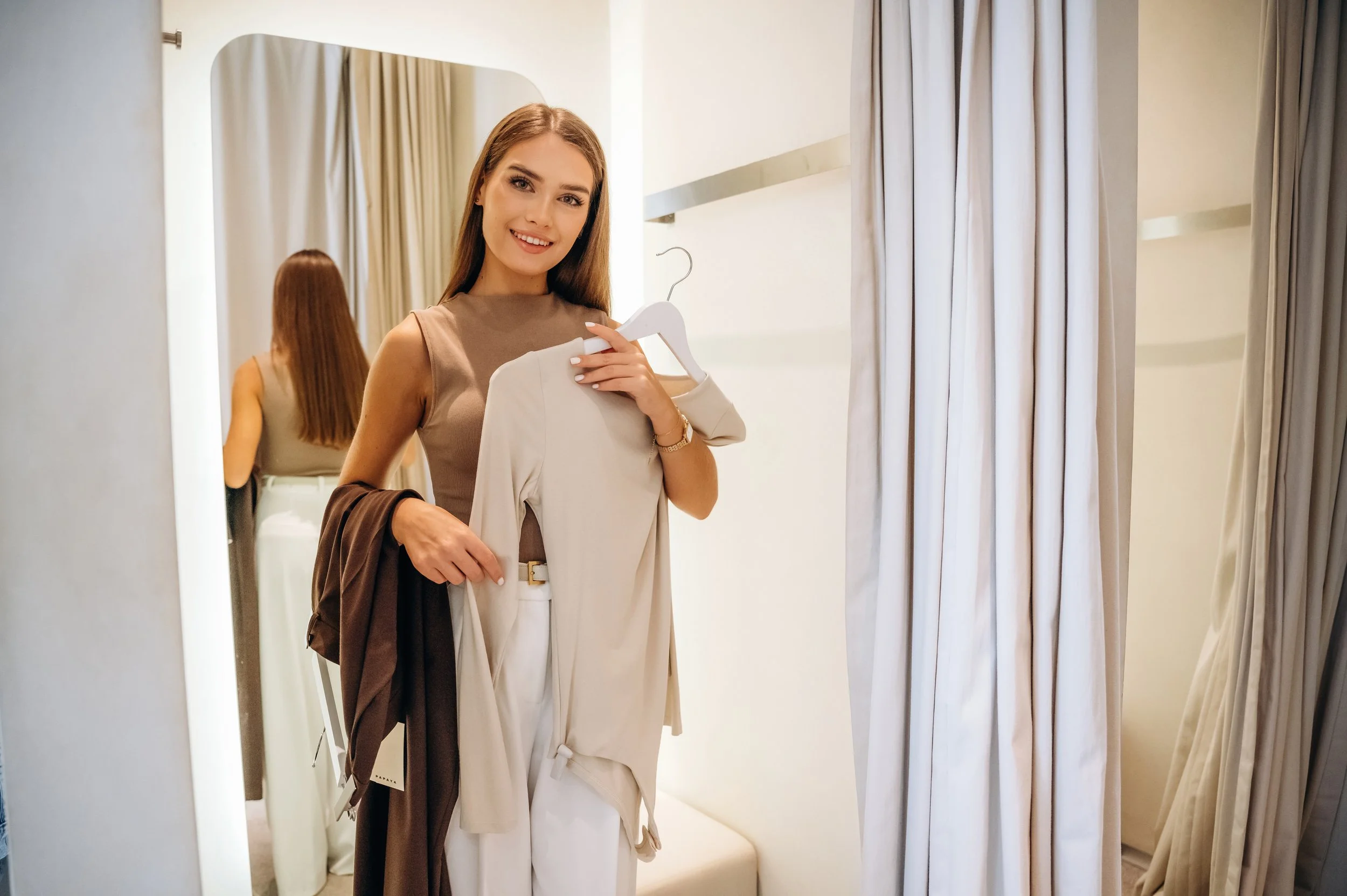
You open your wardrobe and stare. There are clothes everywhere — things you bought on sale, things that don’t quite fit, things you keep meaning to wear. And yet, somehow, you have nothing to put on. This is not a problem of quantity. It is a problem of intention.
The capsule wardrobe is not a minimalist trend or a Pinterest aesthetic. It is a practical framework that has existed in one form or another since fashion consultant Susie Faux coined the term in the 1970s. The idea is simple: a small, carefully chosen collection of versatile, high-quality pieces that work together seamlessly, that express your personal style, and that make getting dressed feel effortless rather than exhausting.
This guide will walk you through the exact formula — 30 pieces, organised by category, selected by principle. Not a prescriptive shopping list, but a thinking tool. By the end, you will know how to audit what you already own, identify what is genuinely missing, and build a wardrobe that finally works for your actual life.
Why Most Wardrobes Fail (Even the Full Ones)
The average woman wears 20% of her wardrobe 80% of the time. The rest sits untouched — not because the pieces are unwearable, but because they don’t connect. A wardrobe of disconnected pieces, however individually beautiful, creates daily decision fatigue and the persistent feeling of having nothing to wear.
There are three common wardrobe failure patterns worth recognising in yourself before you begin.
The occasion trap
This is a wardrobe full of things bought for specific events that never quite happened — or happened once. The cocktail dress from a wedding three years ago. The smart blazer for a job interview. The holiday swimsuit cover-up. These pieces take up space without contributing to your daily rotation, and they create the illusion of a full wardrobe while the everyday essentials are threadbare.
The sale trap
Buying because something is discounted rather than because you need it is one of the most common ways wardrobes become cluttered and unusable. A beautiful top in a colour that suits nothing else you own is not a bargain — it is clutter with a good story attached.
The aspiration trap
This is the wardrobe that belongs to the version of you who goes to art gallery openings on weekday evenings and brunches in linen every weekend. If those clothes don’t reflect where you actually go and what you actually do, they will not be worn. The capsule wardrobe is built around your real life, not your aspirational one — with one important exception we will get to later.
If any of this resonates, you might also find value in reading about the psychology of personal style — understanding why we buy what we buy is often the first step toward buying better.
The Capsule Wardrobe Formula: The 30-Piece Framework
Thirty is not a magic number. Some women build a functional capsule with 25 pieces; others find 35 works better for their lifestyle. What matters is the proportion and the logic, not the count. This framework is organised around five categories, each serving a distinct purpose in your wardrobe.
The 30-Piece Breakdown at a Glance
Tops and shirts: 8 pieces
Bottoms: 6 pieces
Dresses and jumpsuits: 3 pieces
Layers and outerwear: 6 pieces
Shoes: 5 pairs
Bags: 2 pieces
Category 1: Tops and Shirts — 8 Pieces
Tops are the highest-frequency items in any wardrobe. They are also where most women over-invest in trend and under-invest in versatility. The goal here is a mix of tones, textures, and necklines that work with every bottom you own.
• 3 × classic T-shirts in neutral tones (white, cream, soft grey or tan) — the workhorses that go under blazers, with trousers, under slip dresses.
• 2 × button-down or relaxed blouse. One classic white shirt; the second in a complementary neutral or subtle pattern.
• 1 × fine-knit top or lightweight rollneck for layering and between seasons.
• 1 × slightly dressier top — a silk-effect blouse or something with a detail that elevates a basic bottom.
• 1 × a top that expresses your personal style — a bold colour, a print, a texture you love — but one that works with at least three of your bottoms.
The test for every top: does it work with at least four of your six bottoms? If not, reconsider.
Category 2: Bottoms — 6 Pieces
Six bottoms sounds restrictive. In practice, it is freeing — because each piece must work with the majority of your tops.
• 2 × trousers: one tailored in a dark neutral, one in a more relaxed silhouette. These two should not be the same colour.
• 2 × jeans or denim: one pair that fits you extraordinarily well (worth spending money on and tailoring), a second in a different cut or wash.
• 1 × midi or maxi skirt — dresses up with a blouse and heels, dresses down with a T-shirt and trainers, and adds an entirely different visual language.
• 1 × shorts or a shorter skirt, depending on your climate. If you never wear shorts, substitute a second skirt in a different length or texture.
Category 3: Dresses and Jumpsuits — 3 Pieces
Three whole-outfit pieces, each covering a different occasion register.
• 1 × everyday dress — a linen shirt dress, a soft jersey wrap dress, something you can wear without overthinking.
• 1 × smart-casual dress — the useful middle ground between too casual and too formal. A midi in a quality fabric tends to be most versatile.
• 1 × special occasion piece — the one aspiration item this formula permits. Something that makes you feel genuinely good, even worn only a handful of times a year.
Category 4: Layers and Outerwear — 6 Pieces
This is where a wardrobe gains its polish. A well-chosen layer transforms a basic outfit into a considered one.
• 1 × structured blazer — over jeans, over a dress, over a white T-shirt. One of the hardest-working pieces in any wardrobe.
• 1 × longline coat in a neutral — camel, charcoal, cream, or navy — that works over everything.
• 1 × lighter jacket for transitional weather — denim, leather, or linen blazer.
• 1 × knitwear — a cardigan or oversized knit for layering over tops and dresses.
• 1 × casual layer — a hoodie, bomber, or soft overshirt for relaxed days.
• 1 × climate-specific outerwear — a rain mac, puffer, or shearling, whatever your geography demands.
Category 5: Shoes — 5 Pairs
• 1 × flat, comfortable everyday shoe — a leather loafer, a clean trainer, a ballet flat.
• 1 × ankle boot or knee boot — the most versatile boot silhouette, wearable from October to April.
• 1 × low or block heel — a kitten heel mule or block-heeled court shoe that takes an outfit into smart territory.
• 1 × sandal or open-toe shoe for warmer months.
• 1 × relaxed weekend shoe — a trainer, slip-on, or espadrille.
Category 6: Bags — 2 Pieces
• 1 × structured everyday bag in a neutral — a leather tote, crossbody, or top-handle that looks appropriate across most of your life.
• 1 × evening or smaller bag for occasions when the everyday bag is too large or too casual.
The Colour Palette Principle
A capsule wardrobe without a colour strategy is just a smaller version of the same problem. The most functional capsules are built around three to four core neutrals and one to two accent colours.
Choose your neutrals first
Common capsule neutrals: ivory/cream, camel, taupe, navy, charcoal, warm grey, chocolate brown, and off-black. Choose two to three that work with your skin tone and that you genuinely enjoy wearing — not the neutrals you think you should wear, but the ones that make you feel like yourself.
Add one or two accent tones
For a warm-toned palette, this might be terracotta, olive, or burgundy. For cooler palettes, consider dusty rose, slate blue, or forest green. The test: does this accent colour work with at least two of your neutrals?
The 80/20 rule in practice
Approximately 80% of your capsule should be in your neutrals. The remaining 20% — the accent top, the patterned skirt, the colourful scarf — provides variety within a coherent system. When everything connects to everything else, you have hundreds of outfit combinations rather than a handful.
For a deeper look at building a wardrobe that grows with you, the pieces on style evolution in your 30s and timeless fashion advice for women in their 20s offer useful starting points for thinking about personal style at different life stages.
Before You Buy: The Capsule Wardrobe Audit
Building a capsule wardrobe does not mean starting from scratch. Most women already own the majority of their capsule — the work is identifying what is genuinely there and what the actual gaps are.
Step 1: Empty and categorise
Take everything out of your wardrobe and categorise it according to the framework above. Everything that does not fit cleanly — occasion-specific items, ill-fitting pieces, things bought and never worn — goes into a separate pile.
Step 2: Apply the four questions
For every piece in your main categories, ask:
1. Do I actually wear this? Not: would I wear it in an ideal life. Do I wear it now.
2. Does it fit well, today, as I am now?
3. Does it connect to at least four other pieces in my wardrobe?
4. Does it align with my real daily life?
A ‘no’ to any of these is a strong signal to remove the piece from your active wardrobe.
Step 3: Identify the genuine gaps
Once you can see your actual wardrobe, the gaps become obvious. You may find you have eight black tops and no trousers that work with them. The gaps guide your shopping.
Step 4: Shop with a list, not a mood
The discipline of the capsule wardrobe is that you only buy what is on your gap list. One targeted purchase that fills a real gap is worth more than ten impulse purchases that create new disconnections.
If sustainability is part of how you think about fashion, the approach to sustainable clothing and ethical fashion brands pairs particularly well with the capsule philosophy — secondhand and slow fashion approaches are a natural fit.
The Outfit Formula: How 30 Pieces Become Endless Combinations
The mathematics of a well-built capsule wardrobe are genuinely pleasing. If every top works with every bottom, 8 tops and 6 bottoms give you 48 combinations before you have added layers, shoes, or accessories. Add three layers and you have 144. Add an accessory, and the combinations continue to multiply.
The base formula
Every outfit starts with a base: one top plus one bottom, or one whole-outfit piece. From there, add one layer and one shoe. This gives you a complete, considered outfit in under two minutes — because every element works with every other element.
The elevation layer
The fastest way to change the register of an outfit is through a single layer. A blazer over a T-shirt and jeans is office-ready. A longline cardigan over the same combination is weekend-ready. The base does not change; the layer does the work.
The signature piece
One piece in your wardrobe should make an outfit unmistakably yours — a particular texture, a colour you love, a silhouette you return to again and again. This is not a departure from the formula. It is the personal expression within it.
Quality Over Quantity: Where to Spend and Where to Save
The capsule wardrobe philosophy is often associated with expensive clothing, and this is a misreading. The principle is value per wear, not price per item. A £30 T-shirt you wear three times a week for three years costs less per wear than a £200 T-shirt you wear twice.
Worth spending more on
Your everyday bag, your main coat, your most-worn shoes, your best-fitting pair of trousers. These are pieces where quality affects how you feel and how you appear every single day.
Worth saving on
Basic T-shirts, seasonal trend items you want to try, occasion shoes you will wear rarely, anything in the experimental stage of your style evolution.
The cost-per-wear calculation
Before any significant purchase, divide the cost by the number of times you realistically expect to wear it in a year, multiplied by the years you expect to own it. A $150 blazer worn 100 times per year for five years costs $0.30 per wear. A $40 top worn twice costs $20 per wear. The numbers reframe what ‘expensive’ actually means.
For women building their capsule on a tight budget, the piece on staying stylish on a budget covers practical strategies for updating a wardrobe without overspending.
The Capsule Wardrobe at Different Life Stages
The 30-piece formula is a framework, not a fixed blueprint. How you apply it shifts depending on where you are in your life and what your daily life actually requires.
For women in active working years
If you spend significant time in professional environments, your capsule may weight more heavily toward smart-casual pieces, with a stronger blazer and trouser representation.
The piece on effortless elegance for casual gatherings is useful for the smart-casual register — how to look considered without tipping into formal.
For women in midlife and beyond
The capsule wardrobe is arguably most powerful for women navigating style in midlife — a time when bodies and lifestyles change, and when clarity about personal style becomes both more valuable and more achievable.
The pieces on effortlessly chic style for women over 50 and timeless sophistication in your 40s apply the capsule philosophy to these decades with attention to the style considerations that are genuinely relevant.
For women building their style identity
If you are still working out what you actually like, start with a smaller version: fifteen pieces you already own and wear, supplemented by two or three intentional additions. From this contained foundation, your real preferences become clearer.
Maintaining a Capsule Wardrobe: The One-In, One-Out Principle
A capsule wardrobe is not a one-time project. It is a practice. The most useful maintenance approach: when a new piece enters the wardrobe, an existing piece leaves.
Seasonal reviews
Twice a year — spring and autumn are the natural points — do a lighter version of the original audit. Ask the four questions again. Remove what has stopped working, note what needs replacing, and approach the season’s shopping with a list rather than a wish.
The waiting period
Before any purchase not on your gap list, implement a waiting period of at least 48 hours. Most impulse purchases do not survive 48 hours of reflection. The ones that do are usually genuinely useful.
Care as a practice
A capsule wardrobe only works if the pieces within it are kept in good condition. Follow care labels, store knitwear folded rather than hung, resole shoes before the damage becomes irreparable. The cost of a cobbler is a fraction of the cost of replacement.
The Deeper Purpose of Dressing Simply
There is a reason the capsule wardrobe has endured as an idea for five decades. It is not really about clothes. It is about the cognitive and emotional space that is freed when you stop making dozens of small decisions every morning about who you are and what that looks like today.
Studies on decision fatigue suggest that reducing low-stakes daily decisions preserves mental energy for the things that matter more. Knowing that your wardrobe works, that any combination you pull together will be coherent, that getting dressed in the morning is one less thing to think about — this has a quietly significant effect on the quality of your days.
The connection between personal style and self-expression is explored in the piece on individuality through fashion — worth reading if you want to understand not just what to wear, but why it matters that you dress with intention.
If you are interested in the broader context of living intentionally, the pieces on mindful morning rituals and overcoming perfectionism explore the same underlying principle of simplifying your environment to support your wellbeing.
Where to Start
If this article has made you want to rethink your wardrobe, start with one step before you buy anything new. Take thirty minutes this weekend to pull everything out of one section of your wardrobe — just the tops, or just the bottoms — and apply the four questions. You will learn more about your real style in that thirty minutes than in months of browsing online.
The capsule wardrobe is not about having less. It is about having exactly enough — and knowing, every time you open your wardrobe, that what is there
Enjoy reading Femmementor?
Join our newsletter for thoughtful, practical content on style, wellness, mindset, and life — delivered to your inbox with no noise and no pressure. Just ideas worth your time.
Subscribe at femmementor.com — and read at your own pace.