How to Dress for Your Body After 50 (When Your Body Has Changed)
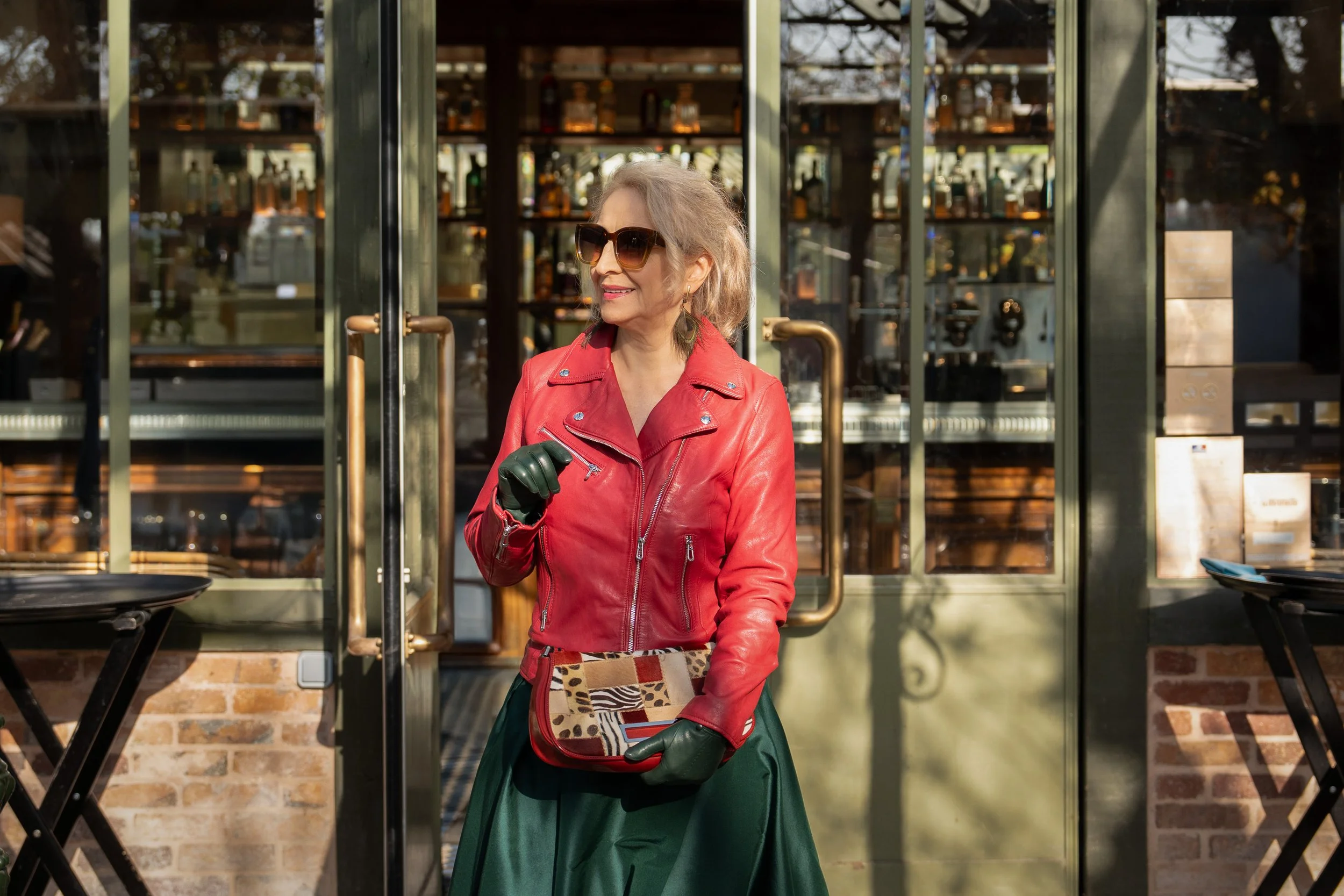
You've been dressing yourself for fifty years. You know what suits you — or you did. The neckline that always worked. The trouser cut that was reliable. The style of jacket that you could put on and feel immediately right in. And then, somewhere in your late 40s or 50s, those certainties started to shift. The waist of a jacket that once sat cleanly now pulls slightly. Trousers that were perfect now feel different at the waist, or the hip, or both. The body you've been dressing has quietly renegotiated the terms.
This is not a small adjustment. The body changes at midlife in ways that are real and specific — weight redistribution toward the waist and abdomen, changes in the bust, altered posture, shifted skin and muscle tone. These changes are physiological and hormonal, and they affect proportion in ways that make previously reliable style choices less reliable.
This article is not about hiding those changes. It is not a guide to camouflage or to minimising. It's about understanding what has actually changed, what that means for proportion and fit, and how to dress the body you have in 2025 — with the same intention and the same pleasure you brought to dressing at 35, directed at a different body with different characteristics. The goal is not to look like you did before. The goal is to look like yourself now, deliberately.
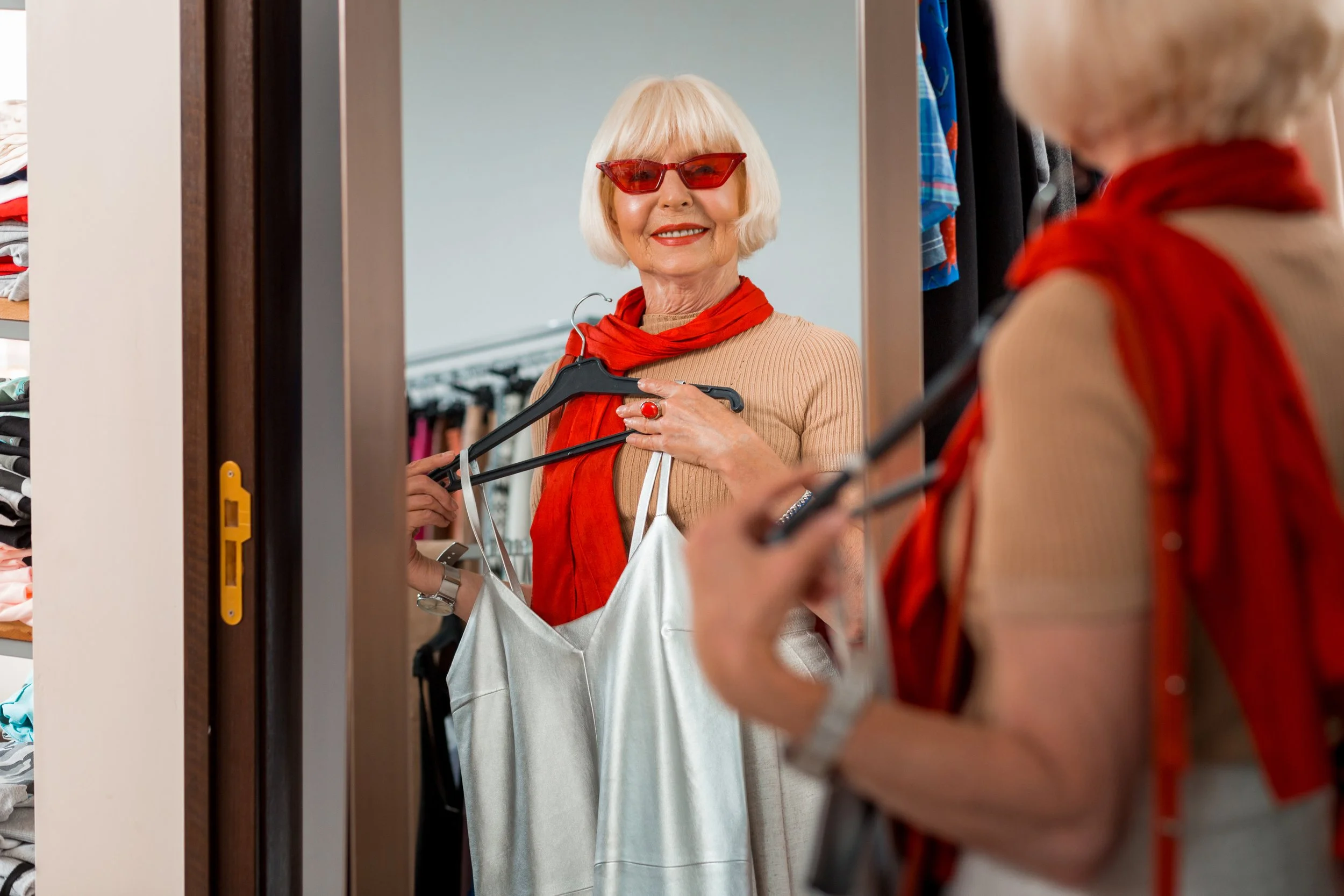
Dressing the body after 50 is not about disguise. It is about proportion — understanding what has changed, choosing what creates balance, and doing it with the confidence that comes from knowing what you're working with.
What has actually changed — and what hasn't
Weight redistribution toward the centre
The most commonly experienced body change of midlife is not significant weight gain but redistribution: fat moves from the hips, thighs, and buttocks (where estrogen promoted its storage) toward the waist, abdomen, and back. The silhouette changes even when the number on the scale doesn't. This redistribution is hormonal and specific to the menopause transition — it's not a response to eating more or moving less, though lifestyle affects its degree.
In dressing terms, this affects primarily the waist definition that clothes previously provided: a jacket or trouser cut that fitted at the hip now has a different relationship with the waist. The visual centre of the body has shifted, and cuts designed around a narrower middle may not fit in the same way or read in the same way on a body that carries more of its weight centrally.
Changes in the bust
The bust changes after 50 in ways that affect how tops, dresses, and jackets fit at the chest and shoulders. Breast tissue typically loses density and becomes less supported, which changes the way tops drape across the chest and how necklines sit. A bra fitting is one of the most practically useful things a woman in her 50s can do for her clothing — most women are wearing the wrong size, and the wrong size affects how everything above the waist looks. The investment is twenty minutes.
Posture and height
Postural changes — typically a slight rounding of the upper back and a forward head position from decades of sitting — are common after 50 and affect how clothing falls from the shoulder. A jacket that sits perfectly on a held-straight shoulder may pull slightly when worn on a slightly rounded one. Garments that rely on precise shoulder placement for their silhouette (structured blazers, raglan sleeves, drop-shoulder knits) are all affected differently by postural changes.
Importantly: posture is largely addressable. The specific practices for improving posture after 50 — hip flexor stretching, upper back strengthening, workstation adjustment — produce real change in how clothes sit within weeks to months. Dressing for the posture you have today while working to improve it is the practical approach.
The principles that work — regardless of specific change
Fit at the shoulder is the foundation of everything
The shoulder seam is the most important fit point in any garment. When the shoulder seam sits in the right place — exactly at the point where the shoulder ends and the arm begins — everything beneath it falls correctly. When it sits wide (a common issue with standard sizing on smaller-framed women, or with the shoulder narrowing that comes with age) the garment collapses and pulls; when it sits narrow (common on broader-shouldered women buying for the body rather than the shoulder) it restricts movement and distorts the shape.
This means that shoulder-seam correction is often more valuable than any other alteration. A jacket whose shoulder seams sit correctly but whose waist is slightly loose or whose sleeves are slightly long is fixable in ways that a jacket whose shoulder seams sit incorrectly is not — the shoulder seam is the one point that cannot be moved without a complete reconstruction of the garment.
Where to create visual definition — and where not to
The question of waist definition is the most discussed and most contested in styling advice for women over 50. A defined waist is visually slimming — the eye reads a narrower point between wider areas above and below. A garment with no waist definition at all can read as shapeless, particularly on a body that carries more central weight than previously. But tight waist definition on a body that has changed in that area can read as restrictive, uncomfortable, and at odds with the body rather than working with it.
The principle that works most broadly: create the suggestion of definition through proportion rather than through tight fit. A slightly fitted top with a straight mid-length skirt implies a waist without requiring one to be tightly held. A belt worn loosely at the natural waist or just above the hip point suggests structure without restriction. The goal is visual interest and proportion, not tight delineation.
Proportion: the principle that simplifies everything
Proportion — the relationship between the volume of the top half and the volume of the bottom half — is the core principle of dressing for any body at any age. Most looks that work well for women over 50 use one of two approaches: a volume-reduced top with a more volumetric bottom (a tucked-in fitted top with wide-leg trousers), or a volume-reduced bottom with a looser top (slim trousers with an oversized blazer). Equal volume on top and bottom tends to read as heavier and less defined; deliberate contrast of volume reads as intentional.
Fabric quality and drape matter more than cut alone
As the body changes, the quality of the fabric becomes more important than the cut of the garment. A well-draped fabric — one with enough weight to fall smoothly rather than cling or stiffen — is more forgiving of body changes than a stiff or thin fabric. Silk, quality crepe, ponte knit, fluid viscose, and heavy cotton all drape in ways that work with the body rather than against it. Thin polyester, stiff denim, and very stretchy jersey all cling or ride in ways that are less flattering on a changed body.
For specific changes — practical guidance
Softer waist definition
The change most women notice first: the waist that was previously the narrowest part of the silhouette is less distinct. A few specific approaches that produce visual waist definition without tight fit:
The wrap principle: wrap styles — wrap dresses, wrap tops, kimono-cut jackets — create a V-angle at the waist that draws the eye to a narrower point without requiring the waist itself to be that narrow. It is the most versatile structural solution available for this change.
The contrast tuck: tucking a fitted top into higher-waisted trousers or a skirt creates a visual break that reads as a defined waist, particularly if the top is slightly fitted (not loose, not tight) and the trouser sits above the natural waist point. The colour contrast between top and bottom amplifies this effect.
The soft belt: a belt in the same colour family as the outfit, or a quality leather belt in a neutral, worn at the narrowest available point — which may be just below the ribs rather than at the conventional waistband position — creates definition without restriction.
Changed bust volume and shape
A properly fitted bra is the technical foundation. Beyond that: V-necklines and wrap necklines are the most reliably flattering for the changed bust because they create a downward V that draws the eye toward the centre and down, rather than across. Cowl necks and draped necklines add volume where it may not be wanted. High crew necks can look proportionally heavy on a larger bust. Crew necks and boat necks work well on a smaller or less structured bust.
Darts — the sewn tucks in a garment that create fitted shaping — are worth paying for through alteration on fitted jackets and shirts. A jacket cut for an average bust on a woman with a different bust size than average will have gaps or pulls at the button level. A tailor moving or adding darts produces a completely different fit for £20-40 and makes the garment look specifically made.
More volume in the abdomen and hip area
The instinct is often to cover the area — long, loose tops worn over everything. This approach can produce the opposite effect from what's intended: adding volume to the area through the visual bulk of the covering layer, and removing all proportion from the silhouette, which makes the whole body appear larger than it is.
What creates better visual proportion: volume that is proportionally placed. A wide-leg trouser — which puts volume at the leg, away from the abdomen — balances upper body volume and creates a line that draws the eye along the length of the leg. A long tunic in a quality draping fabric with tapered trousers moves volume from the middle to the top and bottom. The goal in both cases is visual balance rather than concealment.
The try-on process that actually works
Most women shop with a body image that is either several years out of date (still buying what worked at 40) or at odds with reality in another direction. A useful reset: stand in front of a full-length mirror in your underwear, in good light, and look at what is actually there rather than what you expect to see or fear you'll see. This is not self-criticism — it's information. The specific proportions of your body in 2025 are the brief for your wardrobe.
When trying clothes on: assess in the position you'll actually wear them — sitting as well as standing, moving as well as still. A jacket that looks perfect standing still and pulls across the back the moment you sit will not be worn. A trouser that lies flat on the shop floor and rides below the waist when you sit will not be worn. Try everything sitting down before buying.
The most useful question when something fits technically but doesn't feel right: is this the garment that needs to change, or is it the expectation? Sometimes the piece is wrong. Sometimes the expectation — that a body that has changed should look the way it did when it was different — is the thing that needs updating. the questions about who you are now at this stage are relevant to how you dress as much as to how you work, live, and relate — because how you dress is an expression of the same self-knowledge.
The body you are dressing in your 50s has lived in it for fifty years. It has earned its changes. The clothes that suit it now are not a consolation prize for the clothes that suited it then — they are what suits it now, and knowing the difference is the beginning of dressing well.
Our weekly letter covers style, wardrobe, and life design for women over 50. Subscribe at femmementor.com.