8 Compliments Every Woman Over 50 Deserves to Hear (And Give Herself)
We're not good at this. Women in midlife — competent, capable, often quietly extraordinary women — move through their days with a nearly complete absence of the specific kind of recognition that would actually matter to them. The compliments they receive tend to cluster around appearance ("You don't look 55!"), around roles ("You're such a good mother," "You're so reliable at work"), or around comparative diminishment ("You look great for your age"). The ones they don't receive are the ones that would actually land.
This piece is an attempt to name those. Eight things that women over 50 deserve to hear, regularly and genuinely, and almost never do. Each comes with an explanation of why it matters — not to be therapeutic, but because understanding why a compliment is true makes it easier to actually receive it, rather than deflecting it the way most of us were trained to do.
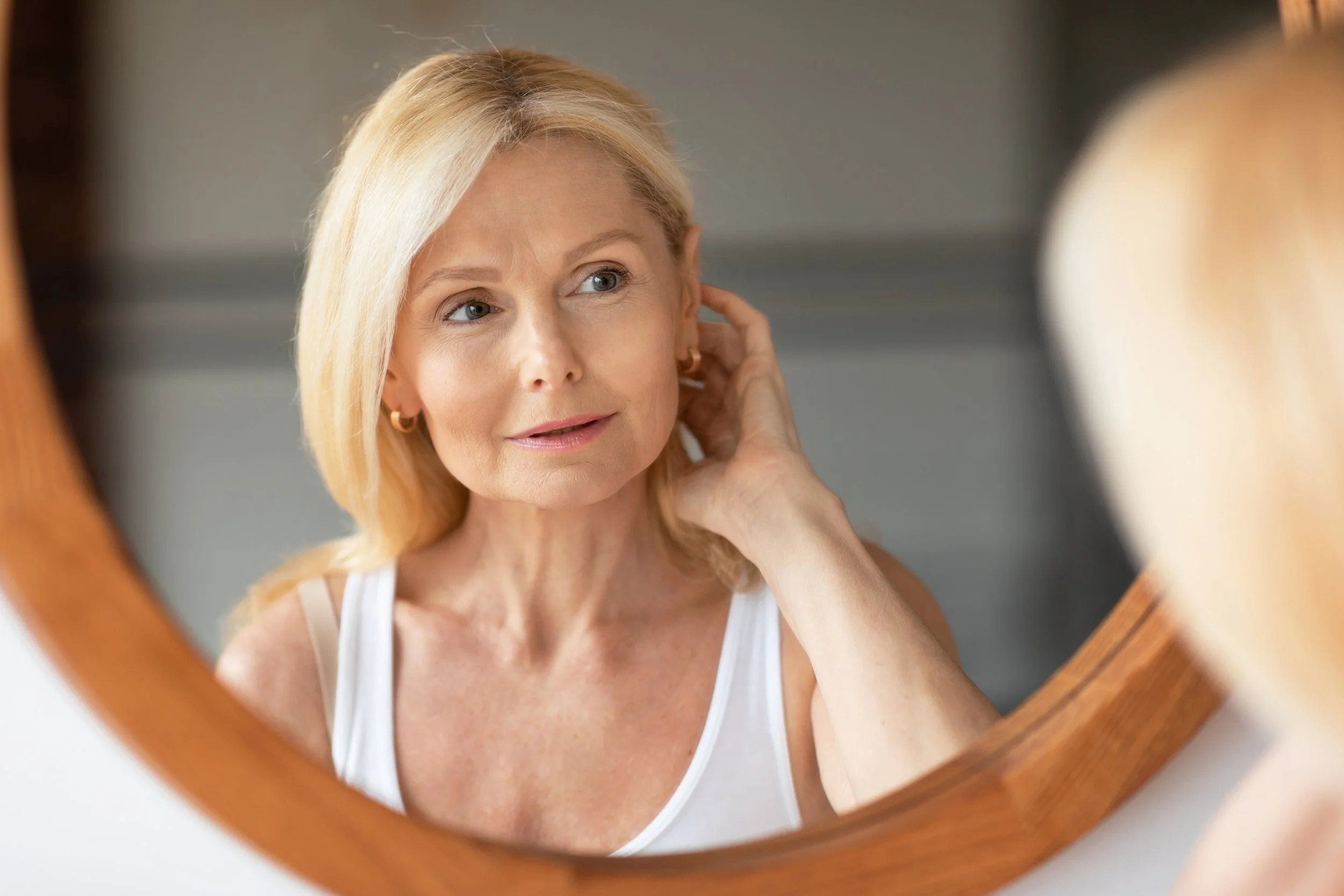
And the giving-to-yourself part, which is in the title, is not self-help advice to stand in front of a mirror and say nice things. It's something different: the practice of saying these things to yourself with the same tone you'd use with a woman you genuinely admire. Most women over 50 are much kinder to their friends than to themselves. This piece is an invitation to close that gap, slightly, starting with eight specific things.
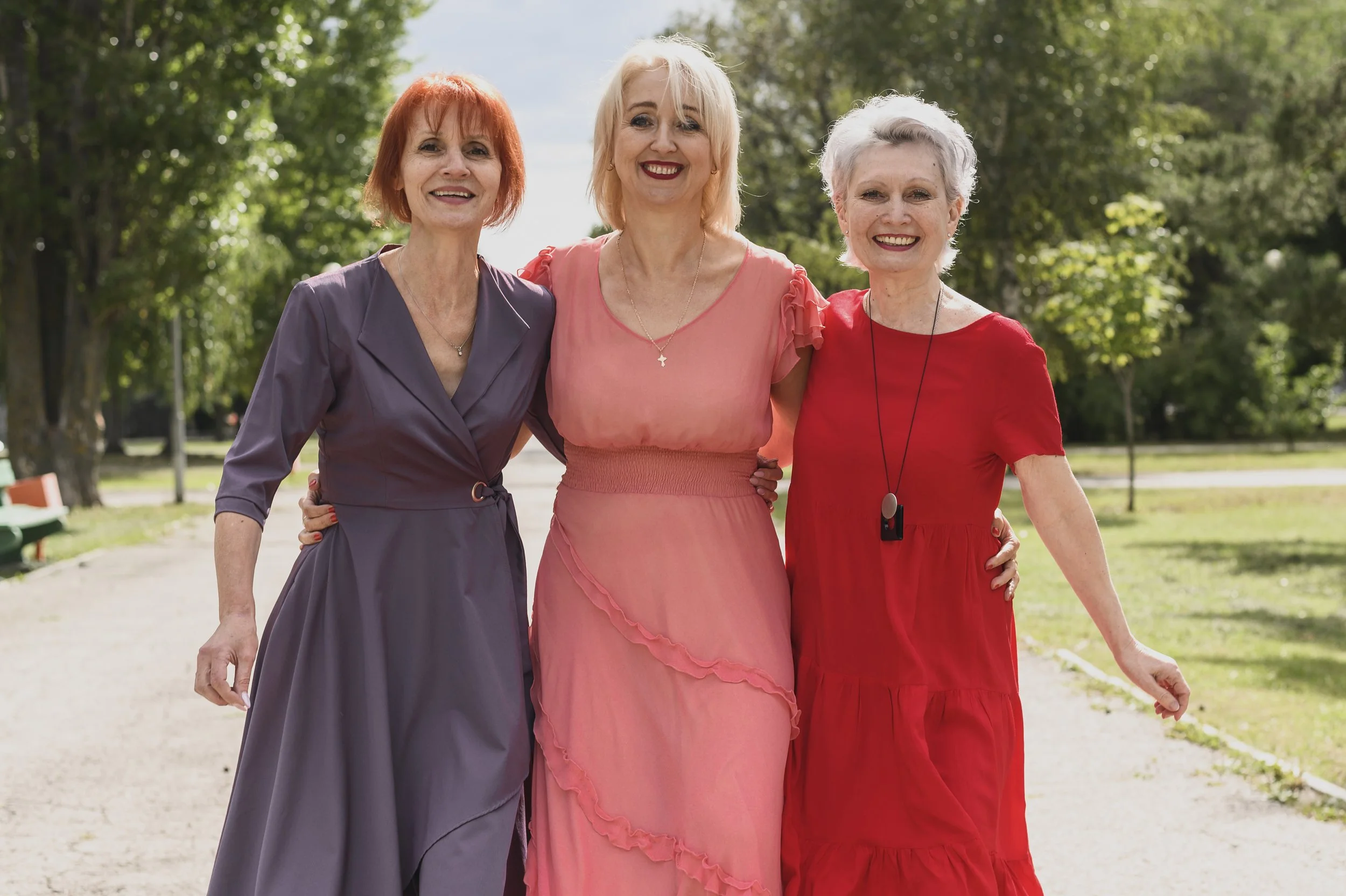
The compliments women over 50 actually need are rarely about how they look. They're about what they've built, survived, and finally, quietly, become.
1. You know who you are — and that's rarer than you think
"You have a clarity about yourself that most people never achieve."
By 50, most women have moved through enough of life's major experiences — love, loss, failure, reinvention, grief, joy, disappointment, surprise — to have developed a genuine relationship with themselves. They know what they value. They know what they regret. They know which situations drain them and which ones light them up. They know the difference between what they want and what they think they should want.
This self-knowledge is not automatic or free. It's earned through decades of paying attention, through mistakes that had real consequences, through relationships that taught difficult things. It is one of the genuine advantages of being at this stage of life — and it's almost never named as such.
The next time you find yourself being decisive, or knowing immediately how something feels, or recognising a pattern in yourself that would have been invisible twenty years ago — that's the self-knowledge. It deserves acknowledgment, not just use.
2. You've survived things most people never talk about
"The resilience you carry is extraordinary — especially because it's invisible."
By 50, almost every woman has moved through at least one or two things that she has never fully told anyone. Not because they're shameful — mostly they're not — but because the cultural container for women's difficulty is narrow and tends to resolve toward "I'm fine" before any real telling happens. The grief that was grieved alone. The fear that was managed without acknowledgment. The thing that happened that changed everything, that almost nobody knows about.
Resilience in women is consistently underestimated because it's quiet. It doesn't usually look like triumph — it looks like function. The woman who kept showing up for her children during her own worst year. The woman who rebuilt her finances alone, without drama. The woman who outlasted a period of her own life that was genuinely hard to outlast. None of this is celebrated. Most of it is invisible.
The things you've survived — particularly the invisible ones — are worth more acknowledgment than you've given them. Not because suffering is noble, but because enduring it honestly, without collapsing into it or pretending it didn't happen, is a form of quiet strength that deserves to be named.
3. Your directness is a gift, not a character flaw
"The way you say what you mean — clearly, without performance — is genuinely rare."
Something happens to many women in their 50s: they stop softening everything. The carefully hedged opinion becomes a clearer one. The reflexive agreement becomes a polite but honest disagreement. The "whatever you think is best" becomes "I think this is best, and here's why." This shift is often read by the wider world as women "getting harder" or "losing their filter."
It's actually the opposite. What's happening is a dropping of a layer of management — the constant, exhausting translation of honest thought into acceptable-for-the-room form — and what's left is direct, unperformed, genuine speech. This is not aggression. It is not "attitude." It is the natural result of three decades of communicating, combined with the gradual loss of patience for performing softness you don't actually feel.
A woman who says what she means is easier to know, easier to trust, and easier to work with than one who wraps everything in hedges. Her directness is a form of respect — for herself and for the people she's speaking to. If you've been told you're "too direct," consider the possibility that what's actually being said is: you no longer make my assumptions easy. That's not a flaw. That's a form of honesty the world needs more of.
4. You've built something real
"Look at what you've made. Actually look at it."
This one is rarely said because the things women build are often invisible — or attributed elsewhere. The family that functions. The careers of the people she mentored. The house that has been a home for twenty years. The friendships she's sustained through multiple seasons of everyone's lives. The community held together by her presence, often without her realising how much of it depends on the quiet infrastructure she provides.
Women tend to see their own contributions as supporting roles — as the connective tissue between other people's stories, rather than as the main architecture of something significant. But look again. The woman who has raised children into adults, who has maintained genuine friendships across decades, who has built a working life and a home and a presence in the world — has built something real and substantial. It doesn't look like a product launch or a building with her name on it. It looks like a life, which is the more significant kind of construction.

Most of what women build doesn't have their name on it. That's a description of the work, not its worth.
5. You've learned how to love well
"The way you love the people in your life — steadily, practically, without drama — is one of the most valuable things about you."
By 50, most women have developed a mature form of love — less possessive than it was at 25, less anxious than it was at 35, less conditional than it was at 40. They love their children without needing the children to be a particular way. They love their partners (when they have them) with some awareness of the person's full complexity, rather than the idealised version. They love their friends through the boring bits as well as the peak moments.
This is not a minor thing. Mature love — the kind that can hold another person in their difficulty without needing to fix it, that can be present without being consumed, that can last across multiple seasons of a relationship — is one of the rarest and most valuable things a person can offer. Most of us spent decades learning it, through failures and recalibrations that were often painful. By 50, many women are genuinely good at it. This deserves to be said.
6. You're more interesting than you were at 30
"The person you are now — textured, specific, with opinions that actually come from somewhere — is more interesting company than the person you were at 30."
This runs directly counter to the dominant cultural narrative, which says that women become less as they age — less desirable, less relevant, less worth attending to. The narrative is wrong, and the evidence is available to anyone who pays attention.
A woman at 50 has more to say than she did at 30, because she's had more experiences to draw on. Her opinions are more interesting because they've been tested by reality. Her sense of humour is sharper because it's been honed by enough years to know what's actually absurd. Her conversation is deeper because she's had decades of conversations to learn from. Her presence is more specific, more particular, more herself — and people who are specifically themselves are almost always more interesting than people who are still performing an aspirational version.
The women who report feeling most invisible in their 50s are often also, paradoxically, the most interesting people in any given room. The capacity to be genuinely seen — rather than generically regarded — is a recognition that has to be consciously extended. If no one has extended it to you recently, consider what that absence is actually telling you about the rooms you've been in, rather than about yourself.
7. You've earned the right to take up space
"You don't have to shrink. You've earned every bit of the space you occupy."
Women are trained from childhood to manage the space they take — physical space, conversational space, space in a room, space in a relationship, space in their own lives. By 50, this training has had thirty-five years to embed itself. The reflexive apology. The automatic step back. The opinion hedged before it's spoken. The need dissolved before it's named.
By 50, you've earned a different relationship with space. Not through aggression or loudness — those aren't the point — but through the quiet accumulation of experience, competence, insight, and presence that decades of genuine engagement produce. The woman who has raised children, sustained work, navigated loss, built relationships, and continued to grow throughout all of it is not someone who needs to apologise for taking up space. She is someone who has demonstrated, over thirty years, that the space she takes produces something of value.
If you're still shrinking — in meetings, in conversations, in your own house — the pattern underneath that shrinking is worth examining. Not to perform confidence you don't feel, but to ask: what am I actually protecting by making myself smaller? The answer is usually something you could safely put down.

You have been earning the right to exist fully for fifty years. The application was always approved. You just have to stop waiting for the notification.
8. You are not too late
"Whatever you're thinking about starting, attempting, or returning to — you are not too late."
This last one is perhaps the most necessary, because the cultural message is so consistently the opposite. The narrative around women over 50 is largely about closing chapters — transitioning out, winding down, making peace with limits. The genuine evidence about women's lives in the second half tells a different story.
The things most worth doing — learning a language, starting a business, repairing a relationship, writing something, creating something, moving somewhere, beginning again — do not have an expiry date attached to them. The people who tend to know this best are the ones who did them late: the woman who started painting at 51 (she's in the article above). The one who moved countries at 54. The one who reinvented her career at 56. They uniformly report that the timing was not a disadvantage. In many cases, it was the opposite.
You have, in rough actuarial terms, between twenty-five and forty years left — depending on health, circumstance, and luck. That is not a small amount of time. It is, if you use it, enough time to build a second entire life. Not the one you had, not the one you missed, but one designed by the person you actually are now, who is the most informed and capable version of yourself that has ever existed.
You are not too late. You are, in fact, exactly on time for the particular chapter that's beginning now.
On actually giving these to yourself
Reading them is one thing. Believing them is another. The gap between the two is where most of us live — we can acknowledge something intellectually without it landing in the place where it actually changes how we move through a day.
The practice of giving these to yourself is not affirmation-writing or mirror-talk. It's subtler. It's catching the moment when you're being competent and actually noticing it, rather than racing past it to the next thing. It's letting a piece of praise from someone you respect land rather than deflecting it with immediate self-deprecation. It's saying the thing you'd say to a friend you admire — and saying it about yourself, in the same register, without irony.
Many women find that the internal voice they use toward themselves is measurably harsher than the one they use toward anyone else they love. This gap is not modesty. It's a habit, and like all habits, it can be changed. The gap between what you'd say to a friend and what you say to yourself is probably one of the most consequential distances in your life right now. Closing it, even slightly, changes how much of your own life you're actually able to inhabit.
The eight things above are not flattery. They are, for most women over 50, simply true. The question isn't whether you deserve to hear them. You do. The question is whether you're able, yet, to let them be true of you — without immediately finding the exception, the qualifier, the reason it doesn't quite apply.
Start with the one that made you most uncomfortable. That's the one doing the most work.
Our weekly letter is written for women who deserve to be taken seriously — including by themselves. Subscribe at femmementor.com.